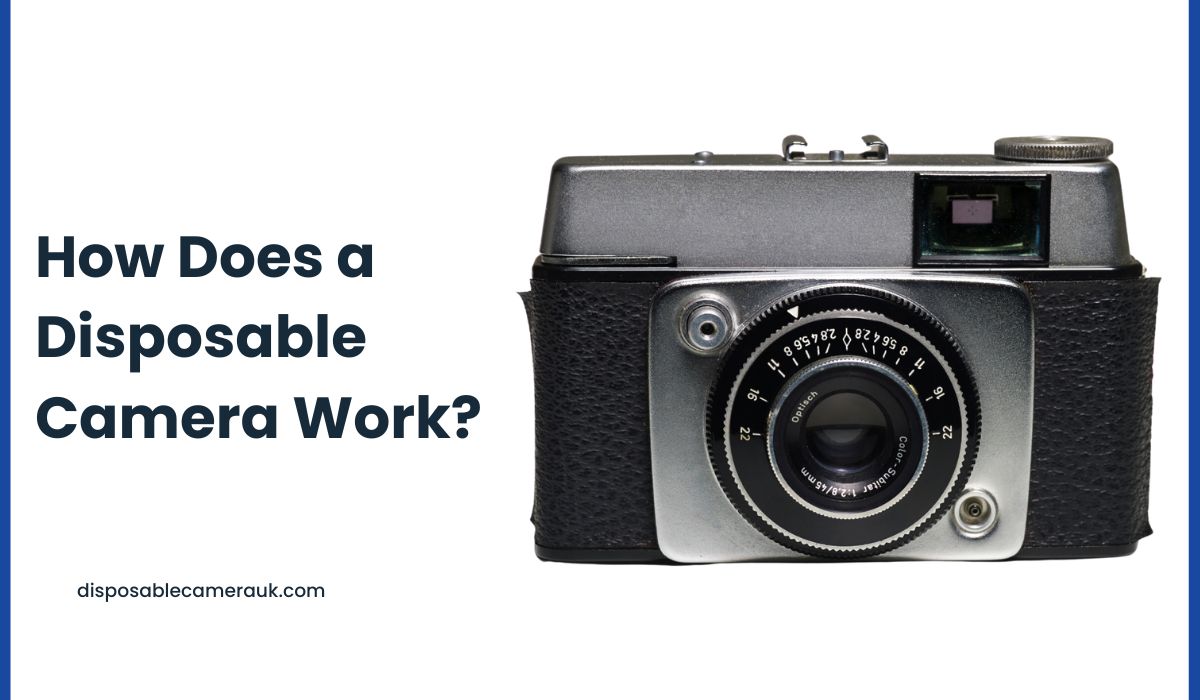
Have you ever used a disposable camera at a wedding or party? You press the button, hear a click, and the moment is captured. But what actually happens inside that little plastic box? It sounds simple, but the process is quite clever.
A disposable camera uses film and light to record real images. No batteries to charge, no settings to adjust. This guide explains exactly how a disposable camera works, step by step.
What Is a Disposable Camera?
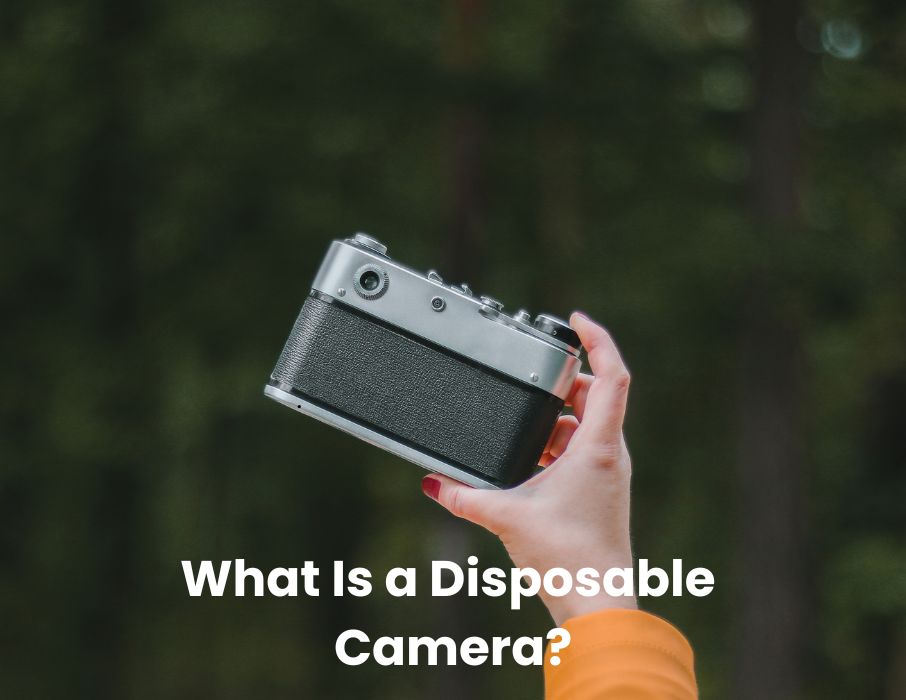
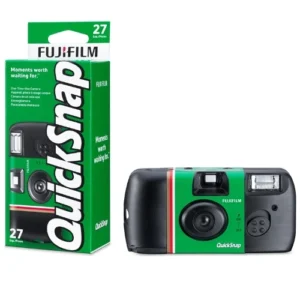
A disposable camera is a small, cheap camera. It comes pre-loaded with film. You use it once and hand it in. A photo lab then develops your pictures.
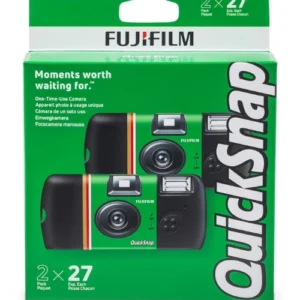
Most disposable cameras give you 24 or 27 shots. Everything you need is already inside the box. No settings. No charging. Just point and shoot.
What Is Inside a Disposable Camera?
A disposable camera has just a few parts. Each part does one job.
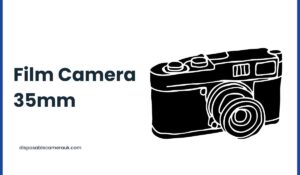
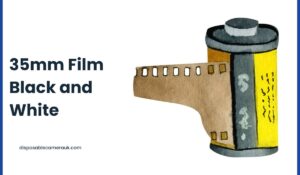
1. Film Roll This is the most important part. The film is light-sensitive. It records images when light hits it. Most cameras use 35mm film.
2. Lens The lens is small and simple. It sits at the front of the camera. Light passes through it and lands on the film. The focus is fixed. This means it works best for subjects 1 to 3 metres away.
3. Shutter The shutter is a tiny flap. It opens when you press the button. It stays open for a split second. Then it closes again.
4. Flash Most cameras have a built-in flash. It runs on a small battery. It helps you take photos in low light.
5. Film Advance Wheel After each shot, you turn this wheel. It moves the film forward. This gets the next frame ready.
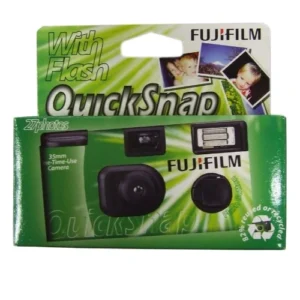
Curious about one of the most popular film cameras out there? Dive into our full review of the Fujifilm Disposable Camera to see if it’s the right pick for you.
How Does a Disposable Camera Work? Step by Step
Here is exactly what happens when you take a photo.
Step 1 — You press the button The shutter opens. Light enters through the lens. This takes less than one second.
Step 2 — Light hits the film The film is coated with tiny crystals. They are called silver halide crystals. When light hits them, they react. Bright areas react more. Dark areas react less.
Step 3 — A hidden image is created You cannot see this image yet. It is called a latent image. It is invisible until the film is developed.
Step 4 — You advance the film You turn the small wheel on top. This moves the film along. Now the next frame is ready for the next shot.
Step 5 — The flash fires (if needed) Did you turn the flash on? Then a small charge builds up in the camera. When you shoot, the flash fires. It lights up your subject for a brief moment.
Step 6 — You hand in the camera When all the shots are used, you take the camera to a photo lab. The lab opens it in total darkness. They remove the film. They develop it using chemicals. Your photos appear.
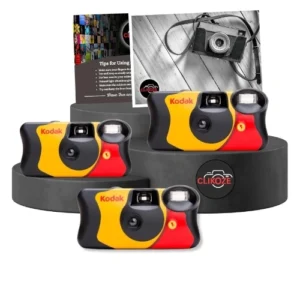
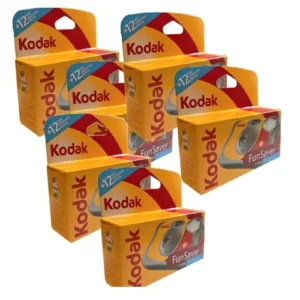
Want a trusted classic for your next roll of film? Browse our in-depth guide on Kodak Disposable Cameras to pick the perfect option for any occasion.
Why Do Disposable Camera Photos Look Different?
Disposable camera photos have a unique look. They are grainy. The colours are warm. The edges can be soft.
This happens for a few reasons.
- Film grain — The silver crystals create a natural texture. This is called grain. It shows more in low light.
- Fixed settings — The camera cannot adjust to the light. This makes some photos slightly over or under exposed.
- Simple lens — The plastic lens adds softness. Especially at the edges of the frame.
People love this look. It feels real. It feels honest. No filter can copy it.
Flash Tips: When to Use It
The flash on a disposable camera is limited. It reaches about 1 to 3 metres. Here is when to use it.
Use the flash when:
- You are indoors
- It is dark or cloudy outside
- Your subject is in shadow
- The sun is behind your subject
Skip the flash when:
- You are outside in bright daylight
- You want a natural, moody look
Wait for the small orange light before you shoot. This means the flash is ready.
Want to add a fun and nostalgic touch to your special day? See why so many couples choose Disposable Cameras for Weddings to capture genuine moments guests will love.
Top Tips for Better Disposable Camera Photos
Want great results? Follow these simple tips.
- Shoot in daylight. Natural light gives the best photos.
- Get close. Stay between 1 and 3 metres from your subject.
- Use the flash outdoors too. It fills in harsh shadows on faces.
- Hold the camera still. Press the button gently. Use both hands.
- Advance the film fully. Do this after every single shot.
- Keep it dry. Do not leave it in a hot car or wet bag.
Conclusion
Now you know how a disposable camera works. Light hits film. Chemicals react. A photo is made. It is simple. It is clever. And the results are beautiful.
Disposable cameras capture real moments. No editing. No filters. Just life as it is. Ready to try one? Browse our range of disposable cameras and find the perfect one for your next event.
FAQs
Q: Can a disposable camera be reused?
A: No. It is made for one use only. Some labs do refill the camera body. Ask your local lab if they offer this.
Q: How long does development take?
A: In-store labs can be ready in 1 to 2 hours. Postal services take around 5 to 10 working days. Many labs also send your photos digitally.
Q: Do disposable cameras expire?
A: Yes. Each camera has an expiry date on the box. Old film can look faded or grainy. Always check the date before you buy.
Q: Can I take one through airport security?
A: Yes. But X-ray machines can damage film. Ask for a hand check instead. This is especially important for ISO 800 film. Most disposable cameras use ISO 400 film and are usually fine.
Q: Why does the flash take time to charge?
A: The flash uses a capacitor. It needs a few seconds to build up power. Wait for the orange light. Then shoot.
Q: Can I get my photos in digital format?
: Yes. Most labs offer digital scans. Some post services only give digital files. You can share them straight from your phone.
Q: How many photos can I take?
A: Most cameras give you 24 or 27 shots. Waterproof or panoramic cameras may vary.