35mm film photography is not dead. It is very much alive. In fact, it is growing fast. More people are picking up old film cameras. They want that raw, real look. Digital photos feel too clean. Too perfect.
Film brings back grain, texture, and soul. This guide covers everything you need to know about 35mm film photography. From cameras to film rolls. From exposure to developing. Let’s dive in.
What Is 35mm Film Photography?
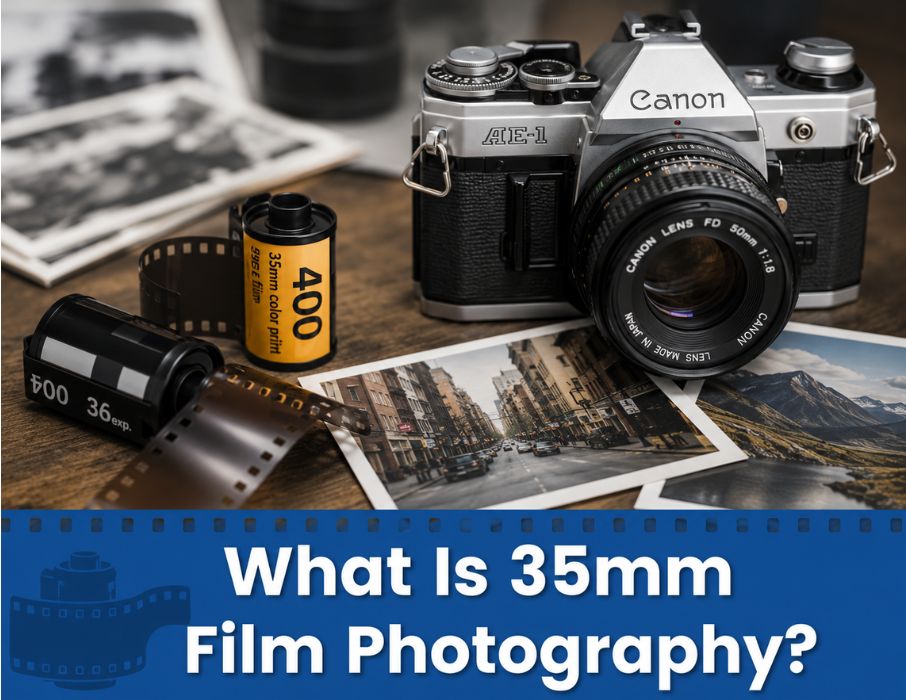
35mm film photography uses a specific film format. The film strip is 35mm wide. This includes the sprocket holes on each side. It was first used in movie cameras. Later, it became the standard for still photography. Brands like Kodak, Fujifilm, and Ilford still make this film today. Each roll usually holds 24 or 36 exposures. That means 24 or 36 photos per roll.
This format became popular because it was compact. It was also affordable. Photographers could carry many rolls in a small bag. The image quality was also excellent for its size. Even today, 35mm remains the most common film format in the world.
Why Photographers Still Love Film in 2026
Digital cameras are fast. They are convenient. But film offers something different. It offers patience. It offers surprise. You do not see the photo right away. You wait. You develop the roll. Then you see the result. This process feels special to many people.
Film also has a unique look. It has natural grain. It has soft colors. It has a certain warmth. Digital sensors try to copy this look with filters. But real film has its own chemistry. Real silver halide crystals react to light. This creates a look that software cannot fully replicate.
Many young photographers are discovering film for the first time. They grew up with digital cameras and phones. Film feels fresh to them. It feels like an art form. Not just a quick snapshot.
Curious about one of Fujifilm’s most versatile film stocks? Dive into our full Fujifilm 400 Review to see if it’s the right film stock for your photography.
Choosing a 35mm Film Camera
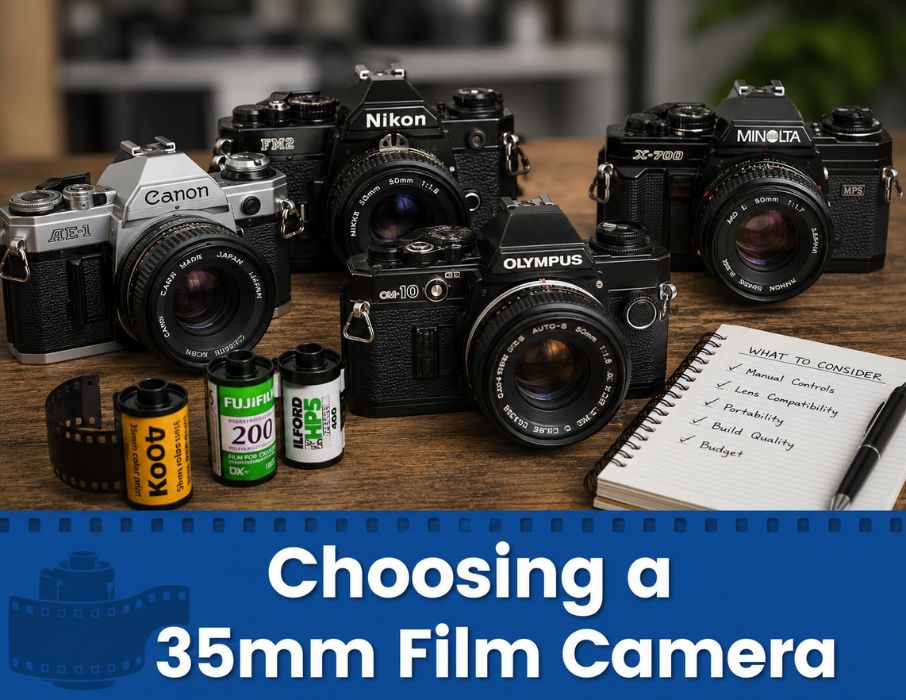
There are many types of film cameras. Each one works differently. Here are the main types:
SLR Cameras (Single Lens Reflex): These use a mirror system. You look through the lens directly. Popular brands include Canon AE-1, Nikon FM2, and Pentax K1000. These cameras give full manual control.
Point and Shoot Cameras: These are simple and compact. You just point and press the shutter. Great for beginners. Popular models include the Olympus Mju and Yashica T4.
Rangefinder Cameras: These use a different focusing system. The Leica M series is the most famous example. These cameras are often more expensive.
Half-Frame Cameras: These split each frame in half. You get double the shots per roll. The Olympus Pen is a well-known half-frame camera.
For beginners, a simple SLR or point and shoot is best. It is easier to learn on these cameras.
Understanding Exposure: ISO, Aperture, and Shutter Speed
Exposure is the heart of photography. Three elements control exposure. ISO, aperture, and shutter speed.
ISO measures film sensitivity to light. Lower ISO like 100 or 200 works best in bright light. Higher ISO like 400 or 800 works better in low light. But higher ISO also creates more grain.
Aperture controls how much light enters the lens. It is measured in f-stops. A lower f-stop like f/2.8 lets in more light. It also creates a blurry background. A higher f-stop like f/16 lets in less light. It keeps more of the image in focus.
Shutter speed controls how long light hits the film. A fast shutter speed freezes motion. A slow shutter speed can create motion blur. Beginners should start with a shutter speed of 1/125 for general use.
These three settings work together. This is called the exposure triangle. Learning to balance them takes practice. But it is the key skill in film photography.
Can’t decide between two iconic Kodak film stocks? Check out our detailed comparison of Kodak Gold vs Ultramax to find out which one suits your photography style best.
Popular 35mm Film Stocks
Choosing the right film stock changes your final image. Here are some popular options:
- Kodak Portra 400: Known for soft skin tones. Great for portraits.
- Kodak Gold 200: Warm, nostalgic colors. Perfect for everyday shooting.
- Fujifilm Superia: Vibrant greens and blues. Good for outdoor scenes.
- Ilford HP5: A classic black and white film. Known for strong contrast and grain.
- Kodak Tri-X: Another black and white favorite. Used by many street photographers.
Each film stock has its own color science. This means each brand renders colors differently. Testing different films helps you find your personal style.
The Developing Process
Once you finish a roll, you need to develop it. Developing turns the exposed film into visible images. This can be done in two ways.
Color film (C-41 process): Most labs can develop this quickly. Many pharmacies and photo labs still offer this service.
Black and white film: This can be developed at home. You need chemicals like developer, stop bath, and fixer. Many photographers enjoy doing this themselves.
After developing, the film becomes a negative. A negative shows colors and tones in reverse. This negative is then scanned. Scanning converts the negative into a digital file. You can then edit and share it online.
Scanning and Sharing Your Film Photos
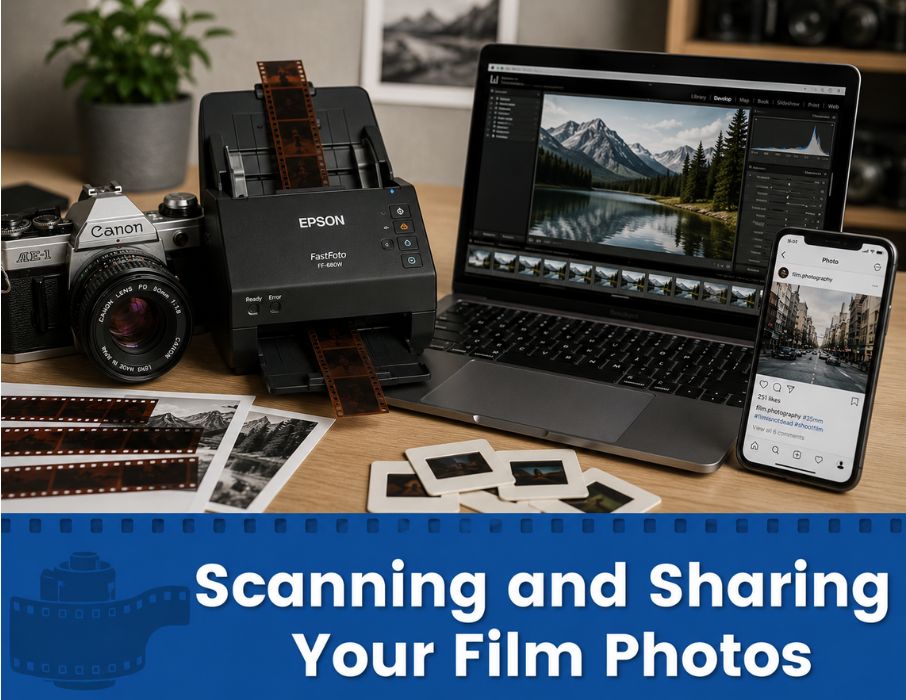
Scanning is an important final step. You can use a flatbed scanner at home. Or you can use a dedicated film scanner. Many photo labs also offer scanning services with developing.
Once scanned, you can lightly edit your photos. Adjust exposure or contrast if needed. But many photographers keep edits minimal. The natural film look is often the main appeal.
Tips for Beginners Starting with Film
- Start with a simple, affordable camera.
- Use color negative film first. It is more forgiving with exposure mistakes.
- Learn the exposure triangle before shooting a full roll.
- Take notes on your settings for each shot.
- Do not rush. Film teaches patience.
- Try both color and black and white film stocks.
- Join online film photography communities for tips and inspiration.
Curious about the best 35mm film cameras available today? Check out our detailed guide on Film Camera 35mm to find the perfect camera for your photography journey.
Conclusion
35mm film photography offers a timeless way to capture memories. It teaches patience, discipline, and creativity. From choosing the right camera to understanding exposure, every step matters. The grain, the colors, and the process all add up to something special.
Whether you are a beginner or a returning film lover, this format still has plenty to offer in 2026 and beyond. Pick up a camera, load a roll, and start shooting. The results might surprise you.
FAQs
Is 35mm film photography expensive?
It can be. Film rolls, developing, and scanning all cost money. But many beginners start with affordable cameras and basic film stocks to keep costs low.
Can I still buy 35mm film in 2026?
Yes. Brands like Kodak, Fujifilm, and Ilford continue to produce 35mm film. It is available online and in specialty photo stores.
How many photos can I take on one roll?
Most 35mm rolls offer 24 or 36 exposures. Some special rolls may offer different counts.
Do I need a darkroom to develop film?
No. Many labs handle developing for you. However, black and white film can also be developed at home with basic equipment.
Is film photography better than digital?
Neither is truly better. They serve different purposes. Film offers a unique aesthetic and slower process. Digital offers speed and convenience. Many photographers use both.