Fujifilm 400 is a popular film. Photographers use it for 35mm and medium format cameras. Are you a beginner? Or a pro comparing films like Kodak Portra 400, Kodak Gold 400, and Kodak UltraMax 400? Either way, Fujifilm 400 is worth a look.
This guide covers everything. You’ll learn about grain, color, ISO speed, and best uses. You’ll also see how it compares to other films. By the end, you’ll know if it fits your style.
What Is Fujifilm 400?
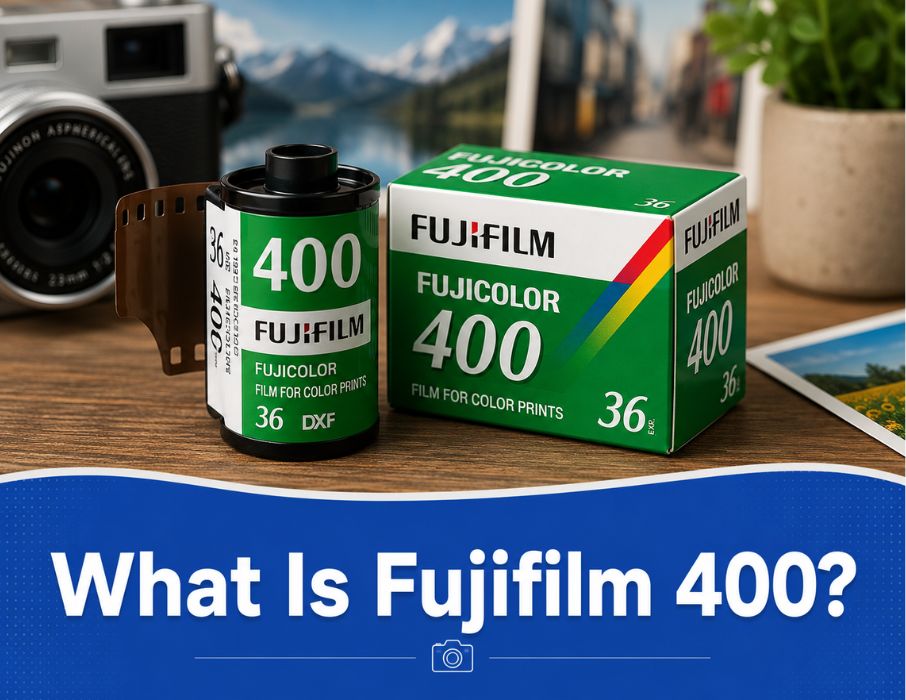
Fujifilm 400 is a color negative film. Its ISO speed is 400. This means it works well in daylight. It also works in lower light. It’s a color print film. This means labs scan or print the negatives. This is different from slide film. Slide film gets viewed directly.
ISO 400 sits in the middle. It’s faster than ISO 100 or 200 film. It’s slower than ISO 800 or 1600 film. So it’s less grainy than fast films. But it’s more flexible than slow films.
This makes Fujifilm 400 great for many things. Use it for street photos. Use it for portraits. Use it for travel shots. Use it anytime light changes fast.
Can’t decide between two iconic Kodak film stocks? Check out our detailed comparison of Kodak Gold vs Ultramax to find out which one suits your photography style best.
Key Features of Fujifilm 400
Color and Saturation
Fuji film has a known look. Colors lean cool. Greens and blues stand out. This differs from Kodak film. Kodak often leans warm. Kodak also flatters skin tones more.
Fujifilm 400 gives natural but bold colors. This works well outdoors. Skies look blue. Grass looks green. Landscapes pop.
Grain
ISO 400 film shows more grain than ISO 100 film. But Fujifilm 400 keeps grain tight. It looks classic, not messy. Scan it well, and the grain adds charm.
Exposure Latitude
This film forgives mistakes. Overexpose it a bit? No problem. Underexpose it a bit? Still fine. This makes it great for beginners. It also helps with older cameras that lack precise meters.
Push and Pull Processing
Need more speed? Push this film to 800 or 1600. This adds grain and contrast. It still works in a pinch. Pulling the film down is rare. But some photographers do it for effect.
Sharpness and Detail
Fujifilm 400 holds detail well. Edges look crisp. Fine textures stay visible. Hair, fabric, and leaves all show real texture. This makes it a good pick for prints, not just online sharing.
Skin Tones
Skin tones on Fujifilm 400 lean a bit cool. Some shooters love this look. Others prefer warmer film for portraits. Test a roll first. Then decide if it suits your subjects.
Curious about the best 35mm film cameras available today? Check out our detailed guide on Film Camera 35mm to find the perfect camera for your photography journey.
Fujifilm 400 vs Other 400 Speed Films
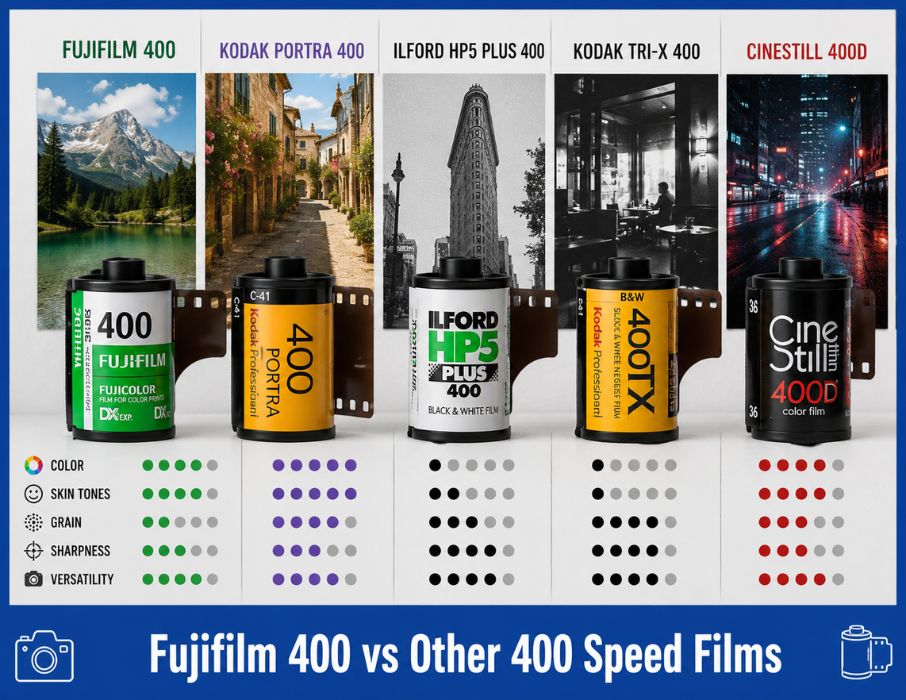
People often ask: how does Fujifilm 400 compare to Kodak film?
Fujifilm 400 vs Kodak Portra 400: Portra 400 is a pro film. It’s known for soft, natural skin tones. Many wedding photographers choose it. Fujifilm 400 leans bolder and cooler. It suits landscapes more than portraits.
Fujifilm 400 vs Kodak Gold 400: Gold 400 is a budget film. It has warm, nostalgic tones. Fujifilm 400 feels cooler and sharper. Pick based on the mood you want.
Fujifilm 400 vs Kodak UltraMax 400: Both are everyday films. UltraMax leans warm. Fujifilm 400 leans neutral to cool. It comes down to taste.
Best Uses for Fujifilm 400
Try Fujifilm 400 for these:
- Street photography. Light changes fast on the street. ISO 400 keeps up.
- Travel photography. Shoot in sun or clouds. Colors stay reliable.
- Everyday photos. Point-and-shoot cameras love this film. It forgives exposure errors.
- Landscapes and nature. Greens and blues look rich and true.
- Indoor shots. ISO 400 handles dim rooms better than slow film. Skip the flash more often.
Where to Buy Fujifilm 400 and What It Costs
Camera stores sell Fujifilm 400. Online shops sell it too. Prices shift often. Film costs have risen in recent years. Still, Fujifilm 400 stays close to other 400-speed films in price.
Buy fresh stock when you can. Fresh film gives cleaner colors. Old, expired film adds more grain and color shifts. Some shooters like that look. Others don’t. Check the expiry date before you buy.
Buy in bulk if you shoot often. Bulk packs often cost less per roll. Store extra rolls in the fridge. Cold storage keeps film fresh longer.
Curious about medium format photography and the film that powers it? Check out our detailed guide on 120 Film to find everything you need to know.
How to Shoot Fujifilm 400 for Best Results
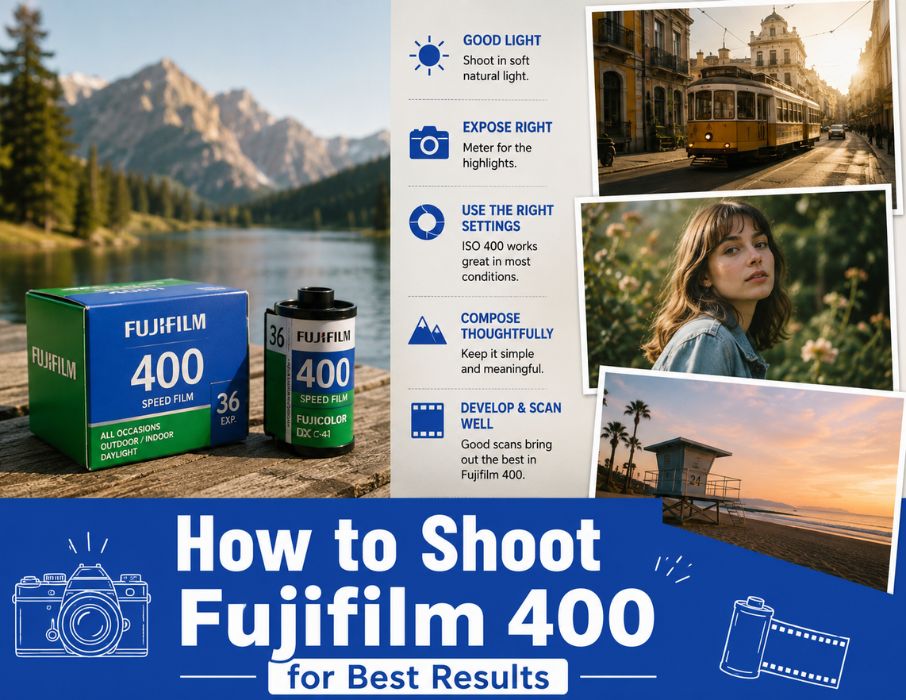
Follow these tips:
- Meter for shadows. This film handles bright spots well. Dark spots lose detail faster. When unsure, overexpose slightly.
- Shoot in daylight when you can. Colors shine best in natural light and golden hour.
- Use a good lab. A C-41 lab develops this film. Good scanning matters just as much as good shooting.
- Don’t underexpose too much. Shadows can turn to mud if you go too dark.
- Store it cold. Keep unused rolls in the fridge. Shoot before the expiry date on the box.
Conclusion
Fujifilm 400 is a solid, everyday film. It gives cool, bold colors. It has tight grain. It forgives mistakes in exposure. Use it for street shots, travel, or daily life.
It also works well for landscapes. Greens and blues look rich. Skies look deep and clear. Beginners can shoot it without much stress. The wide exposure latitude covers small mistakes.
Skip it if you need perfect skin tones — Portra 400 wins there. Skip it too if you want warm, nostalgic colors. Kodak Gold 400 suits that look better.
But for most shooters in 2026, Fujifilm 400 earns a spot in your camera bag. It’s easy to find. It’s simple to shoot. It gives results you can trust roll after roll. Try one roll first. See how the colors and grain feel to you. Then decide if it becomes your go-to film.
FAQs
What ISO is Fujifilm 400?
Fujifilm 400 has an ISO of 400. It works well in both daylight and moderate low light.
Is Fujifilm 400 good for beginners?
Yes. It forgives exposure mistakes. New shooters can learn on it without much worry.
Can I push Fujifilm 400 to 800 or 1600?
Yes. Just tell your lab before you develop it. Expect more grain and contrast at higher speeds.
How does Fujifilm 400 compare to Kodak Portra 400?
Fujifilm 400 looks cooler and bolder. Portra 400 looks warmer and softer. Portra suits skin tones best. Fujifilm suits landscapes and everyday shots best.
Where can I get Fujifilm 400 developed?
Any lab that does C-41 processing can develop it. Most labs also scan your film into digital files.